
Deck and Stair Repair in Littleton and the Denver Metro
Not every tired deck needs to be torn down. Abricos LLC repairs existing decks and deck stairs for homeowners in Littleton and across the Denver metro — replacing rotten beams, worn or broken stair treads and damaged framing members, then finishing the repaired area. We are based in Littleton and work from there; we do not have offices elsewhere in the metro. Every repair starts with a review of the deck itself, because whether a repair is the right answer depends on what the framing, posts, footings and ledger connection actually look like, not on the surface boards alone.
The initial scope and budget discussion is free. A detailed written proposal follows once the scope is confirmed, after review and a site visit where appropriate.
Share your scope
Tell us what you want to change, your city or ZIP and the best way to reach you.
Review the property
We discuss the initial scope and budget, then arrange a site visit where the work calls for one.
Receive a written scope
Once the scope is confirmed, the detailed proposal sets out the work, assumptions and next steps.
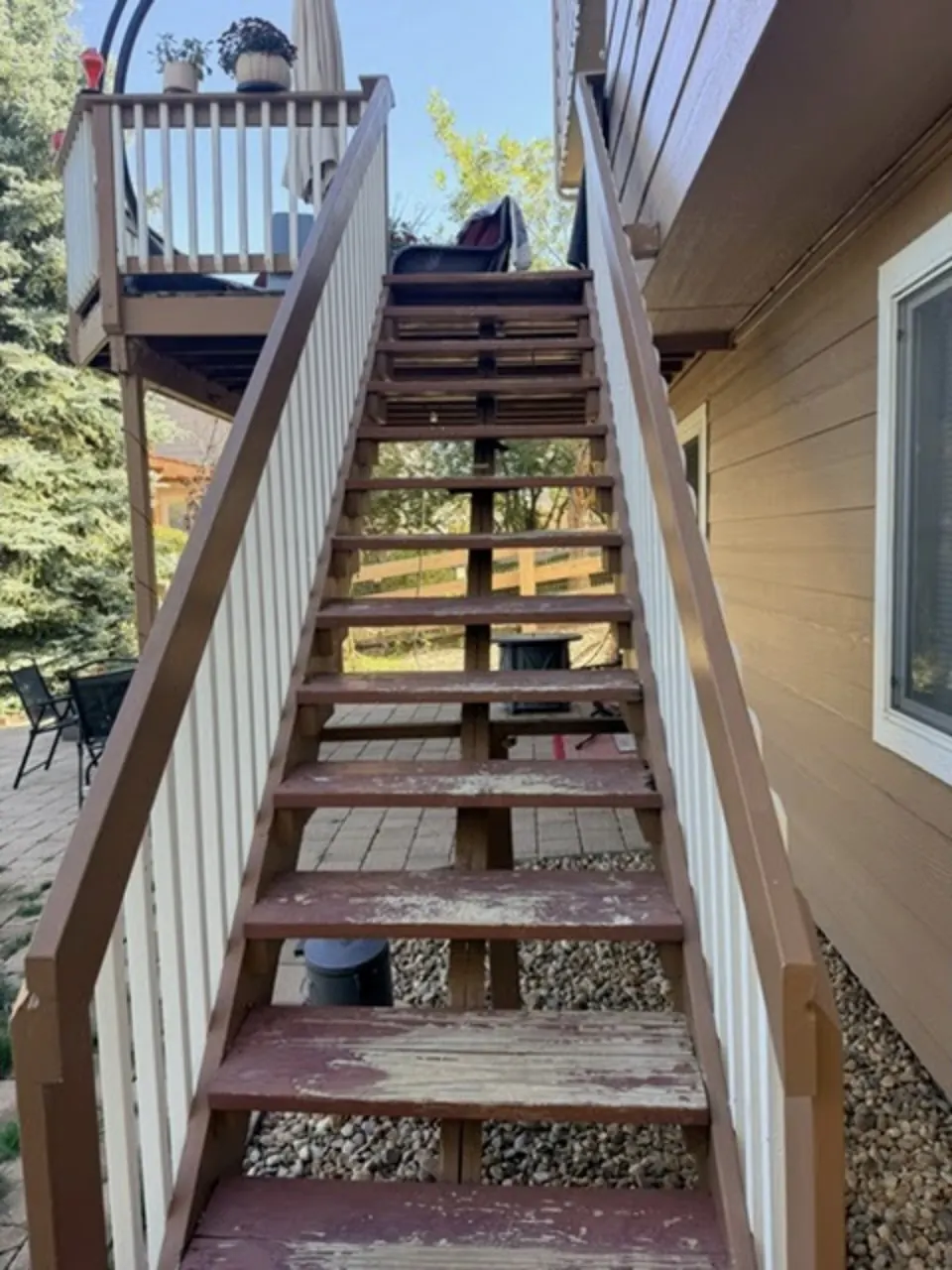
Rotten beams and stair treads replaced on an existing deck
On this October 2026 repair, Abricos LLC replaced several rotten wooden beams, replaced the stair treads and painted the stairs. The existing deck was repaired rather than replaced.
The photos document one repair. The right scope for your deck depends on what an on-site review of the structure finds.

Recent work on similar scope
Browse the full project gallery for more Colorado work.
What's included
- —On-site review of beams, joists, posts, stair stringers, treads, ledger and visible footings
- —Replacement of rotten or damaged wooden beams and framing members where the review supports a repair
- —Stair tread replacement and stair repairs on existing deck stairs
- —Painting or finishing of the repaired stairs and deck components
- —Deck board and railing repairs where the structure below is sound
- —A written repair scope, or a plain recommendation to rebuild when repair is not the sensible option
Planning considerations
- —Photos of the damaged area, the underside of the deck and the stairs sent before the visit
- —Repair versus rebuild decided from what the review finds in the structure, not from the boards alone
- —Permit need confirmed with the reviewing jurisdiction for the specific address and repair scope
- —Structural engineer involved where damage reaches the ledger, posts or footings, or the design changes
- —Finish or paint selection agreed so repaired parts match the rest of the deck where practical
Site-specific decisions
Front Range decks age through water and sun more than through load. Snow that sits on boards and stair treads, melt shedding off the roof above, and wide day-to-night temperature swings keep wood wet and moving, and high UV breaks down unprotected surfaces quickly. Rot tends to start where water collects and cannot dry: beam tops, post bases, stair stringers and the ledger connection against the house. A repair addresses the damaged members and, where it can, the reason water stayed there in the first place.
Jurisdictional requirements
Whether a deck repair needs a permit depends on the jurisdiction and the scope. Replacing surface boards or stair treads is often treated differently from replacing beams, posts, footings or the ledger, and rules vary between Littleton, Denver, Arapahoe County, Jefferson County, Douglas County and neighbouring departments. We confirm the requirement with the reviewing department for the specific address before work starts. Where the damage involves the structure that carries the deck, or the repair changes the design, a licensed structural engineer may need to specify the repair.
Our process for this work
Photos and a short description → on-site review of the deck structure and stairs → repair or rebuild recommendation → written repair scope → permit or engineering where the scope or jurisdiction requires it → replacement of damaged members → finishing and paint → walkthrough of the repaired area.
Rotten beams, stair treads and the parts you cannot see
Most homeowners call about what they can see — a soft stair tread, a split board, peeling paint. The review is about what holds those parts up.
- —Beams and joists. Rot often starts on the top of a beam or where joists bear on it, because water sits there between boards. Probing and checking for soft or discoloured wood shows whether a member can stay or has to be replaced.
- —Stair treads and stringers. Treads wear and hold water; stringers rot at the bottom where they meet the ground or a pad. Both are checked together.
- —Posts and footings. Post bases that sit in water, and footings that have moved, change the repair from replacing members to dealing with support.
- —Ledger connection. Where the deck attaches to the house, missing or failed flashing lets water into both the deck and the house framing. Damage here usually needs a more careful repair plan.
Our deck and stair repair case shows before, during and after photos of one repair: several rotten wooden beams were replaced, the stair treads were replaced and the stairs were painted.
When a repair is the right answer — and when it is not
A repair is good value when the damage is localised and the rest of the deck is sound and correctly built. In that case, replacing the damaged beams, treads or boards and refinishing the area extends the life of a deck you already own.
A repair is poor value when rot runs through many members, the footings are shallow or moving, or the ledger was never flashed. New parts on a failing structure buy little time. In those cases we recommend a rebuild or a new deck, which is covered on our decks and outdoor living page, with budget drivers in the Denver deck cost guide.
To have a deck looked at, request a consultation with your city or ZIP and a few photos of the damage and the underside of the deck.
Trades coordinated on this scope
Specialty work that typically runs alongside deck & stair repair, performed or coordinated with the appropriately licensed professional.
- —Framing & Structural Work
Framing for additions, wall removals, header replacements and structural repairs.
Common questions
Often, yes — when the rot is limited to specific members and the rest of the framing, the posts, the footings and the ledger connection are sound. On one recent repair we replaced several rotten wooden beams, replaced the stair treads and painted the stairs, and the existing deck was kept. Where damage is widespread or the structure was never detailed correctly, replacing pieces of it is usually not good value, and we will say so after the review.
Yes. Stair treads are one of the most common deck repairs because they take the most foot traffic and hold water and snow. We replace worn, split or rotten treads and check the stringers and connections underneath at the same time, since a new tread on a failing stringer does not solve the problem.
Send a wide photo of the whole deck from the yard, close-ups of the damaged boards, beams or treads, a photo of the underside of the deck showing the beams, joists and posts, the stairs from the side, and where the deck attaches to the house. Add your city or ZIP and a short description of what you have noticed. Photos help us prepare, but they do not replace the on-site review.
Repair makes sense when the damage is limited and the structure around it is sound. Replacement makes more sense when rot has spread through several framing members, the footings are shallow or moving, or the ledger is unflashed or failing. The decision comes from looking at the structure. If replacement turns out to be the better path, that work is covered on our decks and outdoor living page.
It depends on the jurisdiction and on what is being repaired. Surface and tread repairs are often handled differently from replacing beams, posts, footings or the ledger. We confirm the requirement with the reviewing building department for the address before work starts, and involve a structural engineer where the scope calls for one.
No. Photos help us understand the problem and plan the visit, but they cannot show concealed rot, fastener corrosion or footing movement, and we do not certify a deck's safety from pictures. The repair scope is set after we have reviewed the structure in person.
We do not publish a standard price or timeline for repairs because both depend on how much of the structure is damaged, access, materials and any permit or engineering the scope needs. After the review you receive a written repair scope with pricing for that specific deck.
Other work we do
Custom Home Construction
Ground-up residential builds coordinated from site work through final walkthrough.
Learn more about Custom Home ConstructionHome Additions
Structural additions, second-story additions, and bump-outs tied cleanly into the existing home.
Learn more about Home AdditionsWhole-Home Remodeling
Full-house renovations, gut remodels and phased whole-home projects.
Learn more about Whole-Home RemodelingRelevant service areas for deck & stair repair
These are the Denver-metro communities where this scope of work most closely matches our current travel and coordination pattern. Reach out about other addresses — coverage depends on site and scope.
Working outside these cities? See the full list of service areas or reach out to discuss your address.